

the balance of opposites
to forge, to know, to understand
to mold, to create, to shape
the emotion of matter
in the making
the first collection of Materica
elevating substance
experiences and expressions
dialogues and moments
atmosphere
the balance of opposites
to forge, to know, to understand
to mold, to create, to shape
emotion from matter
in the making
the first collection of Materica
to elevate the substance
experiences and expressions
ddialogues and moments
atmosphere


the balance of opposites
to forge, to know, to understand
to mold, to create, to shape
the emotion of matter
in the making
the first collection of Materica
elevating substance
experiences and expressions
dialogues and moments
atmosphere
the balance of opposites
to forge, to know, to understand
to mold, to create, to shape
emotion from matter
in the making
the first collection of Materica
to elevate the substance
experiences and expressions
ddialogues and moments
atmosphere

experiences and expressions
// MAGAZINE
Surfaces have taken on an increasingly important role in contemporary design. They are no longer simply the backdrop of a space, but an integral part of the project, capable of interacting with light, defining an atmosphere and shaping its identity.
In this context, metal finishes represent one of the most fascinating expressive tools available to architects and interior designers.
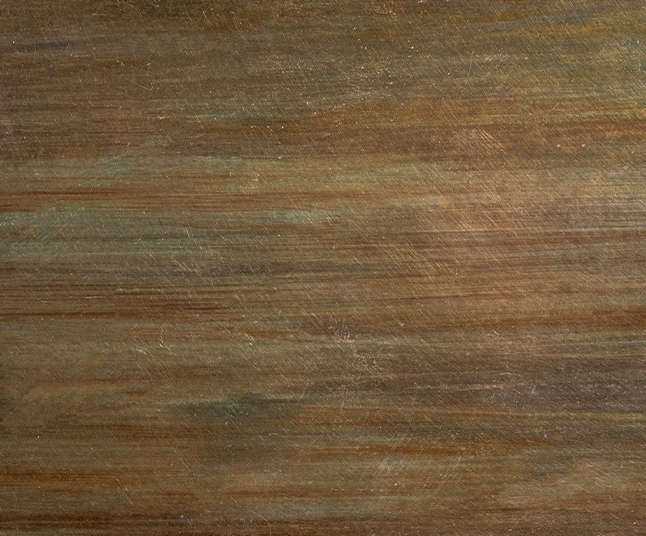
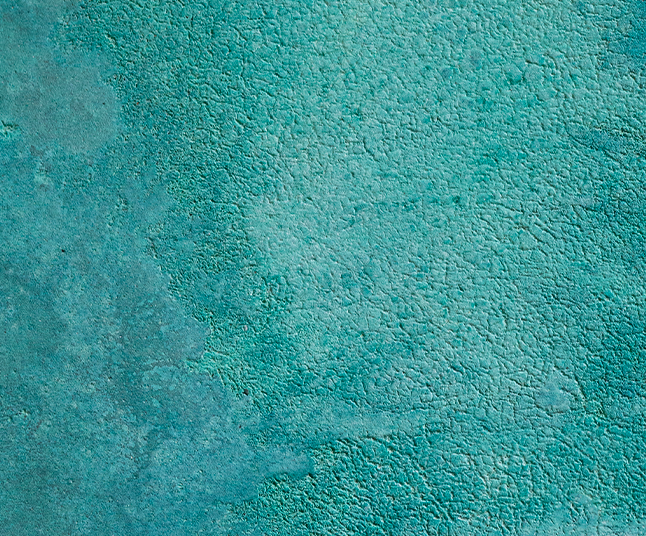
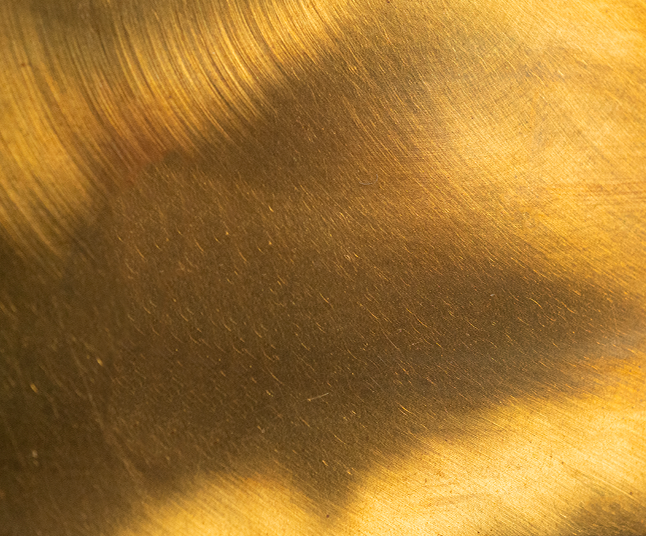
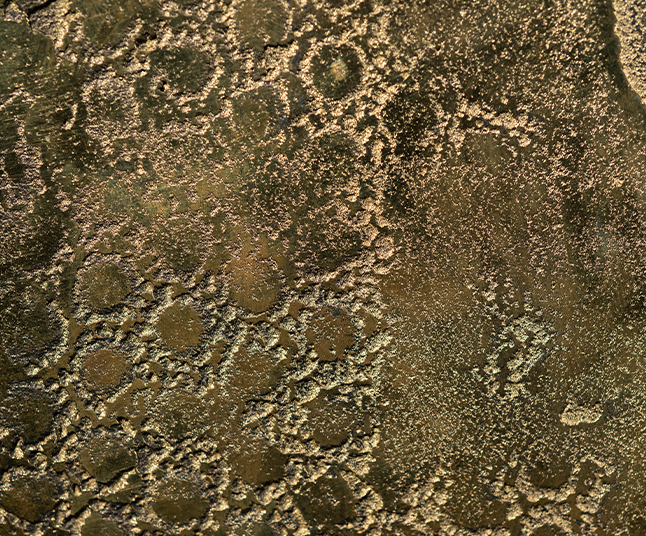
Copper, bronze, brass, zinc, aluminium, oxidised effects and textured surfaces: metal can take on profoundly different identities and, above all, can meet materials and geometries that until just a few years ago seemed far removed from its world.
Talking about metal finishes means entering a world that goes far beyond colour alone.
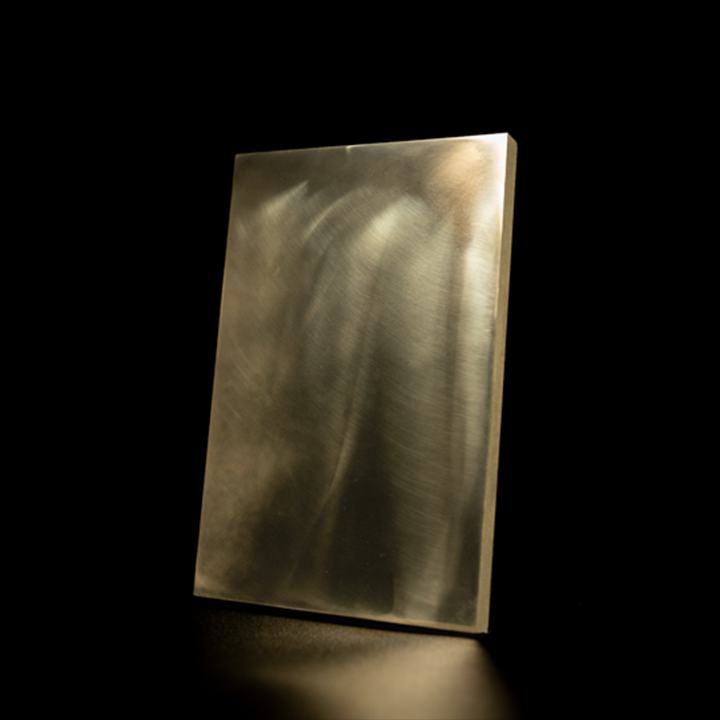
A metal surface can be glossy or matt, uniform or intentionally irregular, deep, textured, oxidised or vibrant. It can reflect or absorb light, change its appearance throughout the day and become one of the defining elements of a project.
It is precisely this versatility that has made metal finishes in interior design a particularly interesting solution for walls, boiserie, accessories, furniture, staircases, windows and doors, and custom-made architectural elements.
For Materica, however, a finish is never merely a decorative effect. It is the result of the encounter between material, research, technology and craftsmanship.
One of the processes that best expresses Materica’s philosophy is metallization, a process that deposits real metal microparticles onto a surface, profoundly transforming its identity.
Copper, brass, bronze, zinc, aluminium and other metals can thus meet different substrates, shapes and geometries, creating authentically metal surfaces that are subsequently worked and finished to achieve ever-changing textures, shades, oxidations and reflections.
For over 40 years, Materica has been studying and refining this process, continuously pushing its boundaries. This research has led to Molecular Metal Weaving (MMW), the latest evolution of Materica’s metallization technology: a process that allows real metal microparticles to fuse with the fibres and weave of materials such as textiles and jute, preserving their structure and texture.
Rather than simply coating the material, the metal interacts with it, creating a new surface in which the original characteristics remain visible and perceptible.
It represents a further step in Materica’s research: transforming matter without erasing its identity, opening up possibilities for metallization that were previously unexplored.
Textured coatings make it possible to interpret the aesthetic language of metal through colours, textures and effects capable of evoking metal surfaces and giving architectural elements a distinctive character.
Materica works with both liquid and powder coatings, developing finishes that can recreate a wide range of metal effects and find applications across architecture, furniture and interior design.
Here, the value lies in much more than the choice of colour. A surface can acquire depth, movement, controlled irregularities and nuances that react differently to light. Coating thus becomes a genuine design choice, capable of contributing to the identity of both the object and the space.
There is no single answer that applies to every project.
Metallization is ideal when the authenticity and presence of real metal are required, together with all the possibilities for processing and transformation that come with it.
Coating, on the other hand, offers exceptional aesthetic and design freedom, making it possible to develop different colours, textures and effects according to the substrate, application and desired result.
This is where know-how makes the difference. The choice of finish should not begin with a colour sample alone, but with an overall analysis of the project: material, geometry, intended environment, exposure, required performance and desired aesthetic result.
For this reason, Materica works alongside architects, designers and specifiers, transforming an initial idea into a surface developed specifically for each project.
Research into finishes does not mean abandoning craftsmanship. It means giving craftsmanship new tools.
Alongside the artisanal expertise that has characterised Materica’s work for over forty years, a new robotic coating system now brings precision, control and repeatability to even the most complex processes.
This technology is particularly important in the world of windows and doors, where Materica can combine its aesthetic research into finishes with an advanced production process.
The robotic system enables coatings to be applied with a high degree of precision and uniformity, while maintaining the attention to surface quality that characterises every Materica project.
Automation and craftsmanship are therefore not opposing worlds. Technology provides control and performance, while human experience continues to guide the choice of finish, preparation, inspection and final result.
When it comes to finishes, aesthetics are only one part of the project.
A surface must also be designed according to the environment in which it will be installed. Humidity, weather conditions, salt exposure and particularly aggressive environments can put metal and architectural elements to the test over time.
Materica’s experience in corrosion protection makes it possible to combine aesthetic research with a strong focus on performance and durability, developing coating systems in compliance with UNI EN ISO 12944 according to the specific requirements of each project.
This is particularly important for outdoor applications and aggressive environments, including marine settings, because a high-quality finish should not only look beautiful when it is created: it should continue to do so over time.
Perhaps this is the most fascinating aspect of contemporary metal finishes: there is no longer a predetermined surface.
There is a material to interpret.
Metallization, coating, craftsmanship and new technologies make it possible to create surfaces around the requirements of each individual project, transforming colour, texture, light and matter into genuine design tools.
This is the principle that has guided Materica’s research for over forty years: not simply coating a surface, but imagining what that surface could become.
Do you have an idea, a material or a project to develop? Talk to Materica and let’s create its surface together.
They are treatments and processes that give a surface specific aesthetic and, depending on the process used, functional characteristics. They can include metallization, coating, oxidation and other surface treatments.
In its metallization process, Materica uses micronised pure metal that is sprayed onto the surface, creating a genuinely metal layer. Coating, on the other hand, uses specific paint systems to achieve different colours, textures, protective properties and aesthetic effects.
It depends on the technology used and the characteristics of the substrate. One of the advantages of surface research is precisely the possibility of working with a wide variety of materials and geometries, evaluating the most suitable process for each project.
Yes. They can be used for boiserie, furniture, walls, staircases, accessories and architectural elements, allowing bespoke surfaces to be developed for residential, hospitality, retail and contract projects.
Yes. Colour, texture, material, gloss level and final effect can be developed according to the specific project through dedicated samples and testing.
experiences and expressions
// MAGAZINE
Surfaces have taken on an increasingly important role in contemporary design. They are no longer simply the backdrop of a space, but an integral part of the project, capable of interacting with light, defining an atmosphere and shaping its identity.
In this context, metal finishes represent one of the most fascinating expressive tools available to architects and interior designers.
Copper, bronze, brass, zinc, aluminium, oxidised effects and textured surfaces: metal can take on profoundly different identities and, above all, can meet materials and geometries that until just a few years ago seemed far removed from its world.
Talking about metal finishes means entering a world that goes far beyond colour alone.
A metal surface can be glossy or matt, uniform or intentionally irregular, deep, textured, oxidised or vibrant. It can reflect or absorb light, change its appearance throughout the day and become one of the defining elements of a project.
It is precisely this versatility that has made metal finishes in interior design a particularly interesting solution for walls, boiserie, accessories, furniture, staircases, windows and doors, and custom-made architectural elements.
For Materica, however, a finish is never merely a decorative effect. It is the result of the encounter between material, research, technology and craftsmanship.
One of the processes that best expresses Materica’s philosophy is metallization, a process that deposits real metal microparticles onto a surface, profoundly transforming its identity.
Copper, brass, bronze, zinc, aluminium and other metals can thus meet different substrates, shapes and geometries, creating authentically metal surfaces that are subsequently worked and finished to achieve ever-changing textures, shades, oxidations and reflections.
For over 40 years, Materica has been studying and refining this process, continuously pushing its boundaries. This research has led to Molecular Metal Weaving (MMW), the latest evolution of Materica’s metallization technology: a process that allows real metal microparticles to fuse with the fibres and weave of materials such as textiles and jute, preserving their structure and texture.
Rather than simply coating the material, the metal interacts with it, creating a new surface in which the original characteristics remain visible and perceptible.
It represents a further step in Materica’s research: transforming matter without erasing its identity, opening up possibilities for metallization that were previously unexplored.
Textured coatings make it possible to interpret the aesthetic language of metal through colours, textures and effects capable of evoking metal surfaces and giving architectural elements a distinctive character.
Materica works with both liquid and powder coatings, developing finishes that can recreate a wide range of metal effects and find applications across architecture, furniture and interior design.
Here, the value lies in much more than the choice of colour. A surface can acquire depth, movement, controlled irregularities and nuances that react differently to light. Coating thus becomes a genuine design choice, capable of contributing to the identity of both the object and the space.
There is no single answer that applies to every project.
Metallization is ideal when the authenticity and presence of real metal are required, together with all the possibilities for processing and transformation that come with it.
Coating, on the other hand, offers exceptional aesthetic and design freedom, making it possible to develop different colours, textures and effects according to the substrate, application and desired result.
This is where know-how makes the difference. The choice of finish should not begin with a colour sample alone, but with an overall analysis of the project: material, geometry, intended environment, exposure, required performance and desired aesthetic result.
For this reason, Materica works alongside architects, designers and specifiers, transforming an initial idea into a surface developed specifically for each project.
Research into finishes does not mean abandoning craftsmanship. It means giving craftsmanship new tools.
Alongside the artisanal expertise that has characterised Materica’s work for over forty years, a new robotic coating system now brings precision, control and repeatability to even the most complex processes.
This technology is particularly important in the world of windows and doors, where Materica can combine its aesthetic research into finishes with an advanced production process.
The robotic system enables coatings to be applied with a high degree of precision and uniformity, while maintaining the attention to surface quality that characterises every Materica project.
Automation and craftsmanship are therefore not opposing worlds. Technology provides control and performance, while human experience continues to guide the choice of finish, preparation, inspection and final result.
When it comes to finishes, aesthetics are only one part of the project.
A surface must also be designed according to the environment in which it will be installed. Humidity, weather conditions, salt exposure and particularly aggressive environments can put metal and architectural elements to the test over time.
Materica’s experience in corrosion protection makes it possible to combine aesthetic research with a strong focus on performance and durability, developing coating systems in compliance with UNI EN ISO 12944 according to the specific requirements of each project.
This is particularly important for outdoor applications and aggressive environments, including marine settings, because a high-quality finish should not only look beautiful when it is created: it should continue to do so over time.
Perhaps this is the most fascinating aspect of contemporary metal finishes: there is no longer a predetermined surface.
There is a material to interpret.
Metallization, coating, craftsmanship and new technologies make it possible to create surfaces around the requirements of each individual project, transforming colour, texture, light and matter into genuine design tools.
This is the principle that has guided Materica’s research for over forty years: not simply coating a surface, but imagining what that surface could become.
Do you have an idea, a material or a project to develop? Talk to Materica and let’s create its surface together.
They are treatments and processes that give a surface specific aesthetic and, depending on the process used, functional characteristics. They can include metallization, coating, oxidation and other surface treatments.
In its metallization process, Materica uses micronised pure metal that is sprayed onto the surface, creating a genuinely metal layer. Coating, on the other hand, uses specific paint systems to achieve different colours, textures, protective properties and aesthetic effects.
It depends on the technology used and the characteristics of the substrate. One of the advantages of surface research is precisely the possibility of working with a wide variety of materials and geometries, evaluating the most suitable process for each project.
Yes. They can be used for boiserie, furniture, walls, staircases, accessories and architectural elements, allowing bespoke surfaces to be developed for residential, hospitality, retail and contract projects.
Yes. Colour, texture, material, gloss level and final effect can be developed according to the specific project through dedicated samples and testing.
sede principale
Via Guido Rossa,12 Scorzè, 30037, Venezia
sede secondaria
Via dell’Artigianato 1, Trebaseleghe, 35010, Padova
Tel +39 041446351
email: info@materica.eu
P.IVA 03812510273
sede principale
Via Guido Rossa,12 Scorzè
30037, Venezia
Tel +39 041446351
P.IVA 0381251023
// ISCRIVITI ALLA NEWSLETTER
Resta aggiornato su prodotti, news ed eventi.